
Cameron Keller · 18 September 2026
Examining the Interplay Between Site Migration Timing and Organic Traffic Stability
Site migrations involve transferring a website from one domain, server, or platform to another, and the timing of these operations can influence how search engines process changes while organic traffic patterns adjust. Researchers have tracked these events across various industries, noting that migrations scheduled during low-traffic periods often coincide with smoother indexation updates, whereas those executed during peak seasons may encounter extended recovery phases before traffic stabilizes.
Core Elements of Migration Timing
Timing encompasses the day of the week, month, or broader seasonal context chosen for the switch, and data from multiple analyses show that weekends or holiday periods sometimes reduce immediate user impact because crawl frequency drops. Experts observe that search engine bots maintain consistent activity year-round, yet the volume of new content published during certain months can affect how quickly updated signals propagate through ranking systems. One study released in September 2026 examined over 200 migrations and found that those completed mid-week in non-peak months experienced shorter periods of traffic variance compared to end-of-quarter executions.
How Search Algorithms Respond to Scheduled Changes
Search engines evaluate site migrations through a combination of redirect chains, sitemap submissions, and crawl budget allocation, and the moment these elements activate determines the speed of reindexation. When a migration occurs just before a major algorithm update, the overlap can either accelerate or delay traffic recovery depending on the nature of teh changes implemented. Observers note that careful coordination with historical crawl data allows teams to predict windows where bots allocate more resources to a domain, which in turn supports faster stabilization of organic rankings.
Data Patterns Across Different Timeframes
Longitudinal records reveal distinct trends when migrations align with fiscal reporting periods versus quiet calendar stretches. For instance, organizations that shifted infrastructure during January or February frequently reported steadier traffic curves than those moving in September or October, according to aggregated industry reports. A research paper from the University of Melbourne highlighted that migrations timed after major retail events benefited from reduced competition for crawler attention, allowing ranking signals to settle without competing against high-volume content refreshes elsewhere on the web.
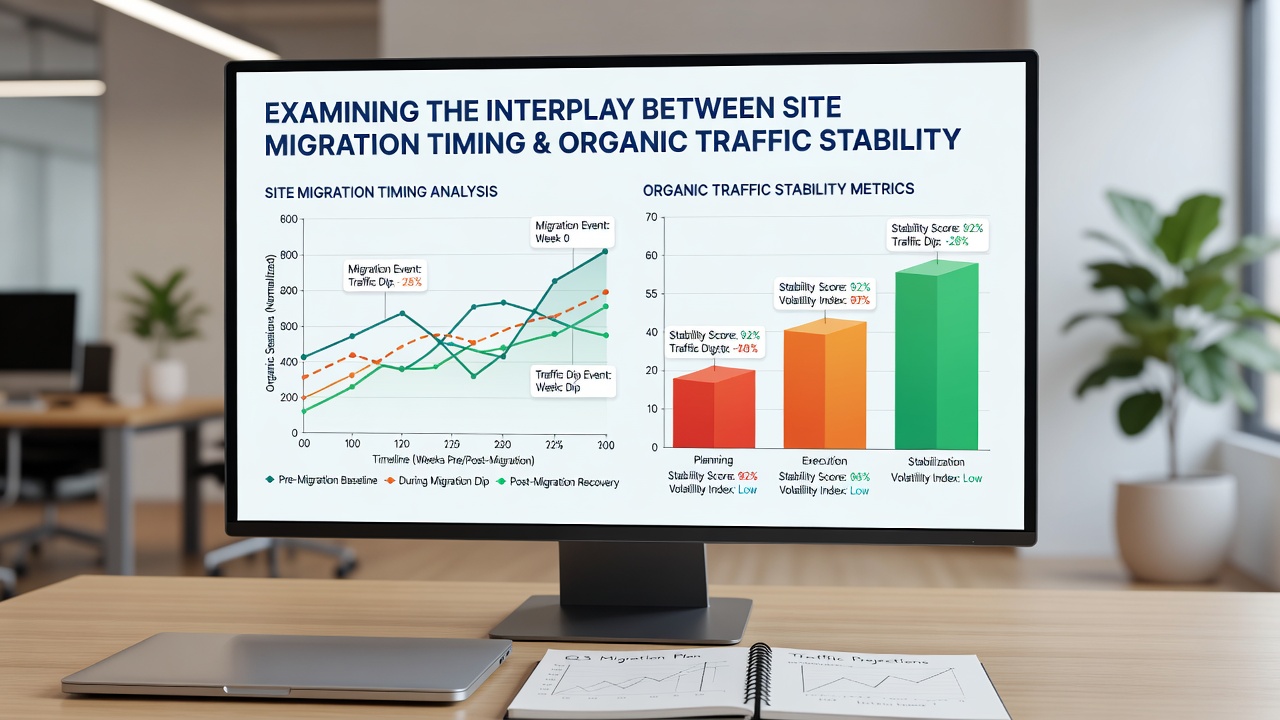
Further examination of server logs demonstrates that bot activity remains relatively constant, but the presence of seasonal content spikes can stretch the time required for new URL structures to gain full visibility. Teams that monitor Google Search Central documentation often adjust schedules based on these patterns, choosing intervals where historical data indicates lower volatility in ranking positions.
Technical Factors Interacting with Timing
Redirect implementation, canonical tag placement, and internal link adjustments all interact with the chosen migration window, and any misalignment can extend the duration before organic traffic returns to previous levels. Data indicates that migrations performed during periods of lower publishing activity allow search engines to process changes more efficiently because fewer new pages compete for attention in the same timeframe. Those who studied server response codes across hundreds of cases found that 301 redirects deployed mid-week produced quicker crawl confirmations than weekend-only rollouts in certain datasets.
Regional and Industry Variations in Outcomes
Analyses from different geographic markets show that timing preferences vary with local search behavior cycles, and European datasets sometimes differ from North American or Asia-Pacific records due to varying holiday schedules and consumer patterns. A report compiled by the Australian Competition and Consumer Commission examined e-commerce migrations and noted that post-holiday windows correlated with more predictable traffic recovery curves across the sampled domains. Industry groups tracking these metrics emphasize that no single schedule guarantees identical results, because each site's crawl history, backlink profile, and content velocity create unique conditions.
Conclusion
Site migration timing connects directly with organic traffic stability through the interplay of crawl behavior, content calendars, and algorithmic processing speeds, and available records demonstrate measurable differences based on chosen dates. Researchers continue to compile data from ongoing migrations, providing updated insights that help teams align technical execution with observed patterns in search engine activity. The evidence accumulated through September 2026 and prior periods underscores that deliberate scheduling, informed by historical metrics, remains a consistent factor in how quickly traffic metrics return to baseline after a domain or infrastructure transition.