Cameron Keller · 2 October 2026
Exploring Patterns in Search Result Page Layout Changes and Their Impact on Click-Through Behaviors
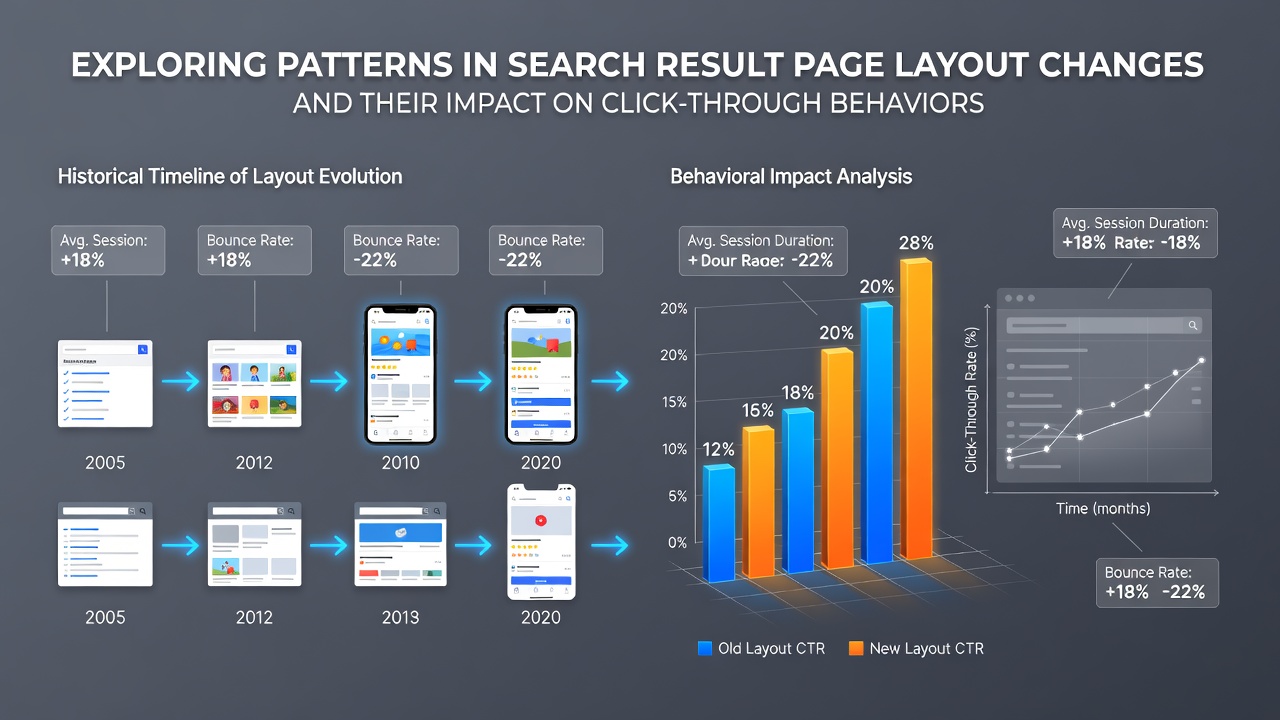
Search engine results pages have undergone repeated structural adjustments since the mid-2010s, and researchers continue to track how those modifications alter user selection patterns. Data from multiple tracking platforms show that the introduction of knowledge panels in 2014 reduced organic click-through rates on affected queries by measurable percentages, while the later expansion of featured snippets created new click destinations that pulled attention away from traditional blue links. Observers note that these layout shifts occur in cycles tied to both algorithmic updates and device usage trends, with mobile interfaces often leading the changes because smaller screens force tighter packing of elements.
Early Layout Adjustments and Initial Click Distribution Effects
Between 2015 and 2018, desktop results began incorporating more vertical elements such as image carousels and local packs, and analysts recorded corresponding drops in clicks on standard organic listings. Studies conducted during that period indicated that queries triggering local packs experienced organic click-through declines ranging from 15 to 25 percent depending on the industry vertical. Meanwhile, the rollout of accelerated mobile pages altered loading priorities and changed how users scanned results on smaller devices, producing different engagement curves than those observed on desktop. Those who've examined server logs from that era point out that dwell times on result pages shortened when additional visual modules appeared above the fold.
Mobile-First Indexing and Its Consequences for Attention Allocation
Google completed its mobile-first indexing transition by 2021, after which layout consistency across devices became a core requirement rather than an option. Research indicates that pages optimized solely for desktop lost visibility in mobile results, which in turn influenced the click distribution patterns recorded by analytics tools. Data collected through large-scale user panels revealed that users on mobile devices interacted more frequently with elements positioned within the first three results, yet they also showed higher rates of scrolling past initial listings when rich media modules occupied prominent space. This pattern persisted into 2023 and 2024 as additional carousel formats entered the results for shopping and video queries.
Featured Snippets, Knowledge Panels, and Measured CTR Shifts
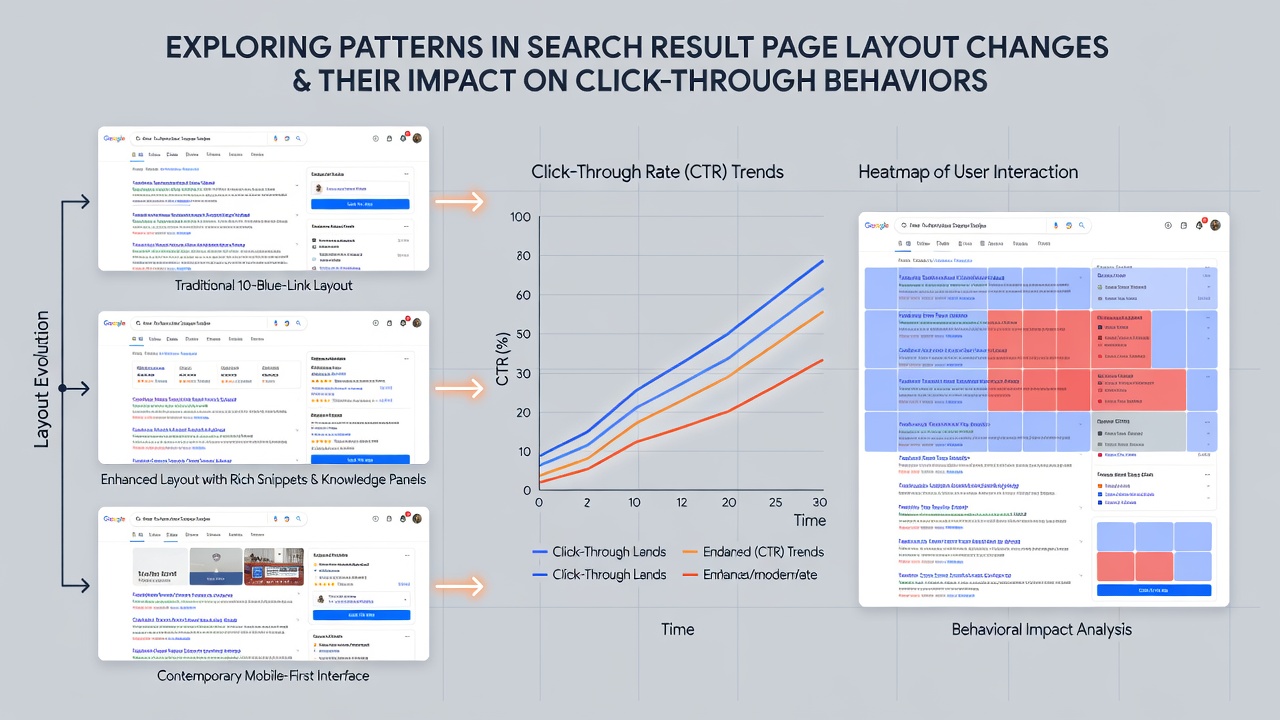
Featured snippets occupy varying positions depending on query type, and multiple academic papers have quantified their influence on downstream clicks. One study from a North American university tracked thousands of search sessions and found that snippet presence correlated with a 30 to 40 percent reduction in clicks to underlying organic results for informational queries. Knowledge panels, which draw from structured data sources, similarly divert attention because they present answers directly on the results page. Figures from industry monitoring services show that commercial queries experience smaller but still noticeable CTR drops when panels include maps or business listings. Those patterns remained stable through 2025, with only minor fluctuations tied to seasonal search volume changes.
AI Overviews and Emerging Layout Patterns Observed in 2026
By October 2026, several major search engines had expanded generative answer modules that synthesize information from multiple sources and display them at the top of results. Early telemetry from that period suggests these modules further compress the space available for traditional organic links, producing additional downward pressure on click-through rates for certain query classes. Researchers tracking user behavior through browser extensions report that generative summaries receive initial gaze attention in over 70 percent of sessions involving factual questions. At the same time, navigational and transactional queries continue to direct clicks toward organic listings because users seek specific destinations rather than synthesized text. Data released by the Australian Competition and Consumer Commission in its digital platform inquiries provides context on how these layout experiments affect competition among content providers across different regions.
Regional Variations in Layout Implementation and User Response
European regulators have required clearer labeling of sponsored and organic elements since the implementation of the Digital Services Act, and compliance data shows that labeled modules receive different interaction rates than unlabeled equivalents in other markets. Canadian academic teams examining bilingual search results documented that French-language queries triggered different snippet frequencies than English ones, leading to distinct CTR profiles within the same country. Observers tracking results across time zones note that layout density increases during peak hours in high-traffic regions, which correlates with slightly lower average clicks per result as users face more competing elements on a single screen.
Longitudinal Data Collection Methods Used by Analysts
Teams monitoring these patterns rely on aggregated clickstream data, eye-tracking studies, and A/B testing conducted by search providers themselves. Reports from the Pew Research Center on search engine usage supply baseline behavioral benchmarks that allow comparisons across years, while smaller-scale laboratory experiments isolate the effect of individual layout components. Analysts combine these sources to build models that predict CTR movement following announced interface updates, although real-world outcomes sometimes deviate when user populations adapt to new formats over several weeks.
Conclusion
Patterns emerging from repeated layout modifications demonstrate consistent directional effects on click-through behaviors, even as specific implementations evolve. Continued monitoring through established research channels will remain necessary as additional generative and visual modules enter results pages in subsequent years. The interplay between screen size, element placement, and query intent continues to shape how users allocate their attention across available options on any given search results page.